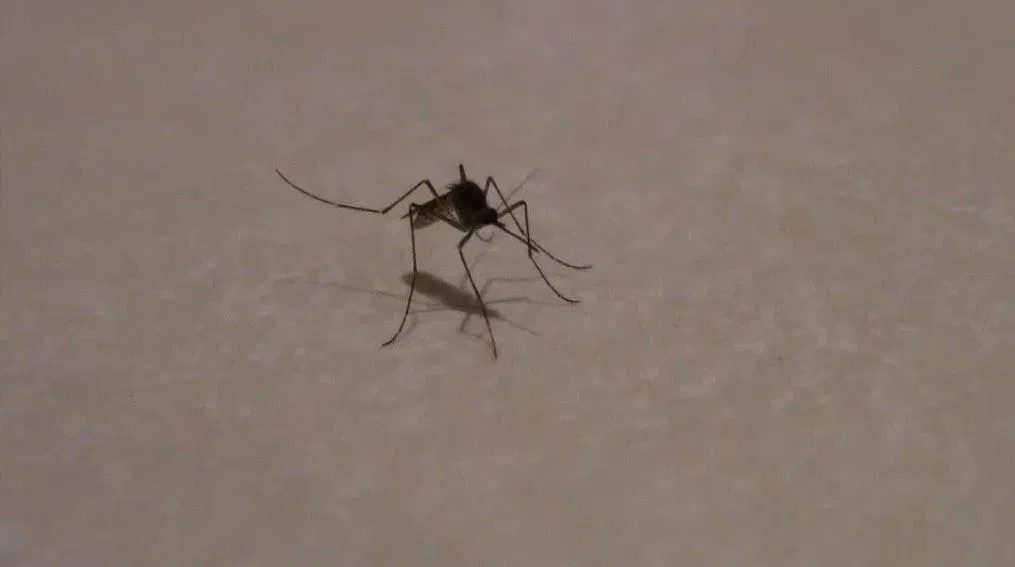
Mosquito in De Pere, August 30, 2021. PC: Fox 11 Online
(WTAQ-WLUK) — The first cases of West Nile Virus this year in Wisconsin have been confirmed in a human and in a horse in Brown County.
The Wisconsin Department of Agriculture, Trade and Consumer Protection (DATCP) confirms that an unvaccinated six-year-old Quarter Horse mare in Brown County tested positive for the virus.
Health officials did not cite specific locations for either of the cases.
Brown County Public Health, De Pere Health Department, and Oneida Nation Health Department do not believe the cases are connected. Authorities have previously found West Nile Virus in mosquitoes and birds in other parts of Wisconsin.
In 2025, DATCP documented five cases of West Nile Virus in horses.
“West Nile virus is transmitted by mosquitoes, and it cannot spread directly between horses and humans,” said Michelle Tipple, Community/Public Health Officer for the Oneida Nation Health Department. “While these two cases are not related, they show mosquitoes in the area are carrying the virus and could continue spreading it to humans or animals.”
According to the Centers for Disease Control and Prevention, West Nile virus causes no symptoms at all in most people. For others, it results in mild, flu-like symptoms between 2 and 14 days after being bitten by an infected mosquito. In rare instances—less than 1% of cases—the victim develops severe illness and need to go to the hospital.
“Anyone can get sick if infected with West Nile virus,” said Anna Nick, Health Officer/Administrator for Brown County Public Health. “However, people who are older, have certain chronic medical conditions, or have weakened immune systems are at higher risk of severe illness.”
For horses, West Nile Virus can cause inflammation of the brain (encephalitis). Symptoms of West Nile Virus in horses include fever, loss of coordination, hind-end weakness, depression, loss of appetite, muscle tremors, teeth grinding, inability to swallow, head pressing, excessive sweating, and going down with an inability to rise. The disease can cause brain inflammation in horses and people, and it is fatal in 30-40% of horses showing signs of illness.
DATCP strongly encourages equine owners to speak with their veterinarians about vaccinating their horses for West Nile Virus. The American Association of Equine Practitioners (AAEP) recommends vaccinating for both West Nile Virus and Eastern Equine Encephalitis as part of the core vaccine protocol, meaning all horses should be vaccinated for these diseases. Adult horses that have never been vaccinated require two doses of the vaccine initially, followed by annual boosters.
In addition to vaccination, DATCP offers these tips to limit horses’ exposure to mosquitoes:
- Remove items that could collect stagnant water (old tires, buckets, unused troughs, etc.).
- Keep rain gutters draining properly; turn wading pools and wheelbarrows upside down.
- Clean and chlorinate pools, outdoor saunas, and hot tubs; drain water from pool covers.
- Empty and replace water in birdbaths at least once a week.
- Consider keeping horses in the barn from dusk to dawn, when mosquitoes are most active.




Comments