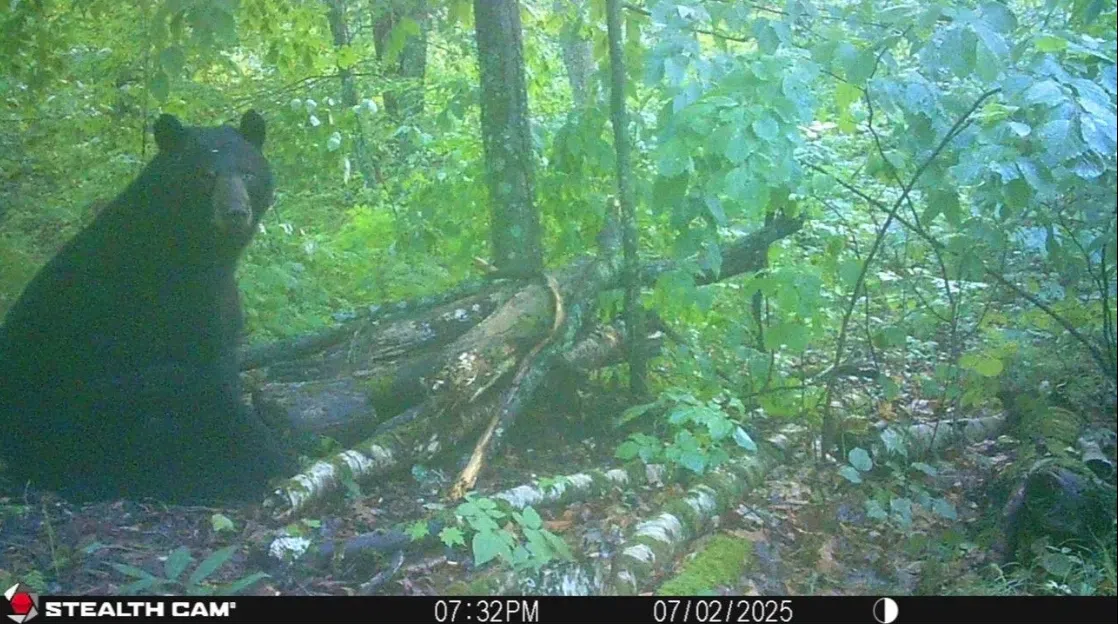
A bear caught on a trail camera in Forest County. (Photo courtesy: Mitchell Lund)
BARRON COUNTY, WI (WTAQ-WLUK) — The Wisconsin Department of Natural Resources reports a weekend black bear attack that severely injured a woman in western Wisconsin is the state’s 15th bear attack resulting in human injuries in the last 12 years.
The DNR said 69-year-old Karen Frye is recovering and in stable condition following the Saturday afternoon attack. It happened outside her rural home near the town of Comstock.
Frye was transported to a local hospital, then transferred to a St. Paul, Minnesota hospital due to the extent of her injuries.
The DNR didn’t offer specific details as to what caused the black bear to attack Frye, saying their investigation is ongoing. However, preliminary findings — including information from Frye’s family — suggest the bear “exhibited a sustained series of aggressive behaviors towards the victim.”
According to the DNR, “Black bears can behave defensively when feeling surprised, cornered or to protect their food or cubs. True aggressive behavior is both rare and distinctive from defensive behavior.”
Bear hunters from the area are weighing in about the current bear population in Wisconsin and what people should know if they encounter a bear.
“They like people food, as long as it’s not too high in preservatives or chemicals,” said Floyd Gasser, owner of Big Woods Bear Bait just outside of Oconto Falls.
Gasser has been operating his bear bait business for the past 28 years. Between him and his wife, he says they’ve killed more than 100 bears.
“We’ve hunted here and from Saskatchewan, all the way to Maine,” said Gasser.
With dozens upon dozens of encounters, Gasser says he’s only felt uncomfortable around bears a few times — once with a territorial male during breeding season, and the other when cubs were involved.
“You don’t want to get between her and the cubs,” said Gasser. “She’s only doing what moms do, which is protect her young.”
The DNR has said it located a cub in a tree when responding to this weekend’s attack in Barron County, indicating the young bear and its mom were involved.
“We’re getting a healthy amount of cubs every single year on multiple trail cameras,” said Mitchell Lund of Appleton, owner of Fowl Language Outdoors. He says most of his trail camera pictures were taken in Forest County.
Lund has been a bear hunt guide the last few years and recommends respect when you are where bears are.
“The best thing to do is stay calm. Avoid running away, avoid getting worked up,” said Lund. “You really want to back out and de-escalate that situation as well as you can. You want to try to appear large. You can make noise, let them know you’re there. Don’t throw anything at them, don’t try to engage with them.”
“The biggest thing with bears is don’t feed them in your yard or your cabin,” said Gasser.
While bears like human food, it’s also recommended you keep away bird feeders and any other potential food sources if you live where bears might be.
The DNR estimates there are 24,000 black bears in Wisconsin, mostly in the northern two-thirds of the state.
Black bears which display aggressive behavior are at an elevated risk for repeating the behavior, the DNR says. Their goal is to capture and humanely euthanize the bear involved in Saturday’s attack.
“We value human safety over all others, and so if you know if a bear makes that contact, we don’t know if that bear might injure another person, so it’s euthanized,” said Andrew Tri, Minnesota’s DNR Bear Project manager.
Several bear traps have been set at the scene with efforts to live-capture the bear at the site of the incident. As of Monday afternoon, the bear involved has not yet been captured, and neither has its cub.
If captured, the sow involved will be assessed once euthanized, including conducting a rabies test to determine whether injury or illness may have contributed to the bear’s behavior and to help assess rabies exposure and risk to the victim per standard human health protocols.
If the cub is captured, it will be relocated and released in the wild. By this time of year, cubs are able to survive on their own and this cub will likely have a better opportunity to thrive in the wild without human intervention.
The DNR’s initial trapping efforts captured a male black bear, which was promptly released. Any other bears captured will be released unharmed.






Comments